-
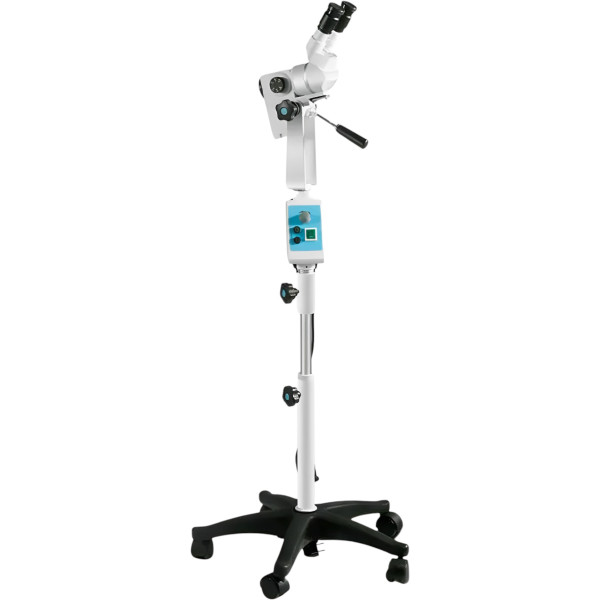 Kernel MedicalBinocular colposcope KN-2200BⅠBinocular colposcope KN-2200BⅠRequest priceView details
-
-
Colposcopes
A colposcope gives the gynecologist a magnified, well-lit view of the cervix and vagina as well as the vulva. It reveals epithelial changes that are easy to miss with the naked eye during a speculum exam. The Finer catalog currently has binocular and video instruments from the Kernel Medical Equipment KN-2200 series. They suit women's clinics and gynecology departments as well as private clinics.
What is a colposcope used for?
Colposcopy is ordered when cytology has shown changes, when the cervix looks suspicious on examination, or as a follow-up after treatment. The doctor examines the surface under magnification, then applies acetic acid and Lugol's iodine. Areas that react differently to the solutions become visible, and a targeted biopsy can be taken from the most suspicious one. Without a colposcope that biopsy would be taken blind. That is why the instrument stands next to the gynecological chair in every room that deals with cervical pathology.
Which colposcopes are in the Finer catalog?
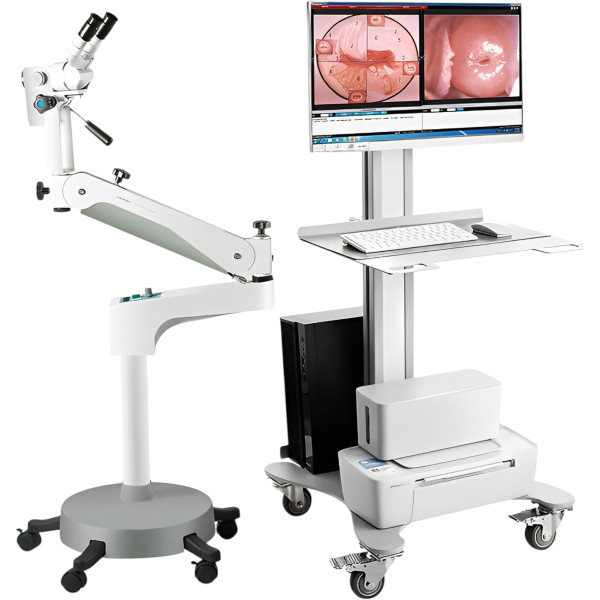
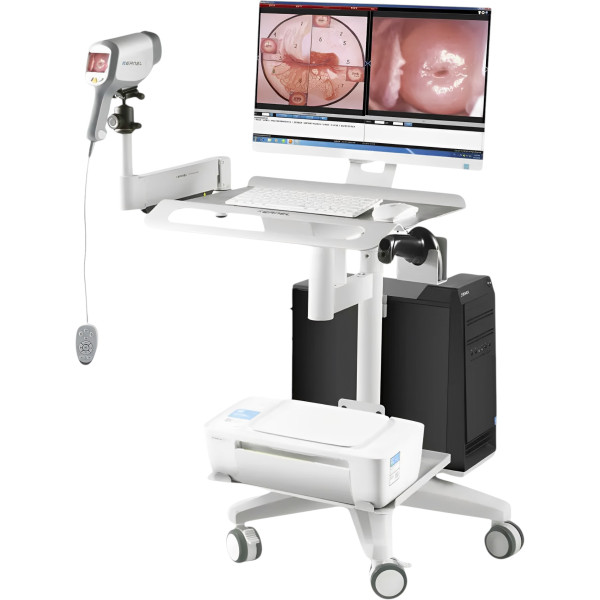
All three models belong to the Kernel KN-2200 series. The KN-2200BI binocular colposcope combines classic binocular optics with digital imaging. The KN-2200B video colposcope is a combined instrument, so the doctor can look through the eyepieces or at the screen. The KN-2200I is a video instrument for gynecological exams with the image on a monitor. For hysteroscopy and other endoscopic procedures in gynecology, see the Endoscopic equipment section, and equipment for surgical treatment is in the Electrosurgery section.
How do you choose a colposcope?
First decide how the doctor will view the image. With a binocular model the doctor looks through eyepieces, and the 3D view helps judge surface relief; many experienced gynecologists are used to exactly that. A video colposcope puts the image on a monitor. The assistant and the patient can see it, and a frame can be saved to the record and compared with the previous exam six months later. It can also be shown to colleagues at a case review or used to train young doctors. A combined model offers both ways of viewing, so the room does not have to choose.
Then look at the optics: the magnification range, whether it changes in steps or smoothly, and the depth of field, so you do not refocus with every movement. LED lighting does not heat tissue and lasts a long time, while a green filter helps see the vascular pattern. Documentation needs photo and video capture with archive software, plus compatibility with the facility's information system. The instrument stands next to the gynecological chair, so check the arm length and how easily it swings aside. And ask who will maintain the light source and camera.
Colposcope price: what does it depend on?
We quote the price in a commercial proposal. It depends on the instrument type (binocular, video or combined) and on the monitor and archive software. The stand and accessories add to it. To buy a colposcope for your room, tell us how many exams a day you do and whether you need to store images. That decides whether a binocular model is enough or a video colposcope with an archive makes more sense from the start.
Where to buy a colposcope?
Finer Ukraine LLC supplies colposcopes to women's clinics and gynecology departments as well as private clinics. The company has worked with medical facilities since 2015. Doctors and engineers on the team help you choose a model and put together a proposal or tender package. They also deliver and set up the instrument and show doctors how to work with it. Other equipment for a clinic is in the Medical equipment section, and fitting out a whole room is described on the turnkey solutions page. The consultation number is 0 800 334 585, and a request form is on the contacts page.
FAQ
1. What is extended colposcopy?
It is a colposcopic exam of the cervix with tests. The doctor first looks at the untreated surface, then applies acetic acid solution and after that Lugol's iodine. Abnormal epithelium reacts to them differently from healthy tissue, and those areas become visible under magnification.
2. Colposcopy or cytology: which is needed?
They are different steps. Cytology (the Pap test) is screening, with the smear assessed in a lab. Colposcopy is done when cytology has shown changes or the cervix looks suspicious, to see exactly where the epithelium has changed and take a biopsy if needed. A cervical pathology room needs both.
3. Can a biopsy be taken under a colposcope?
Yes, that is one of its main purposes. After the acetic acid and Lugol's tests, the doctor sees the most abnormal area and takes a targeted biopsy from it under colposcopic guidance. A video colposcope lets you save a frame showing the biopsy site.
4. How do you use a colposcope?
The patient lies in the gynecological chair and the cervix is exposed with a speculum. The colposcope is brought to working distance and focused, magnification is set, and the cervix is examined untreated, then with the tests and the green filter. On video models, images go to the archive during the exam.
5. Which colposcope should you choose, binocular or video?
Doctors used to a 3D view through eyepieces choose a binocular model. A video colposcope is needed if images must be stored, shown to colleagues or the patient, and compared between visits. The combined KN-2200B offers both ways of viewing in one instrument.
Categories by purpose



- Solutions
- Finer Ukraine