-
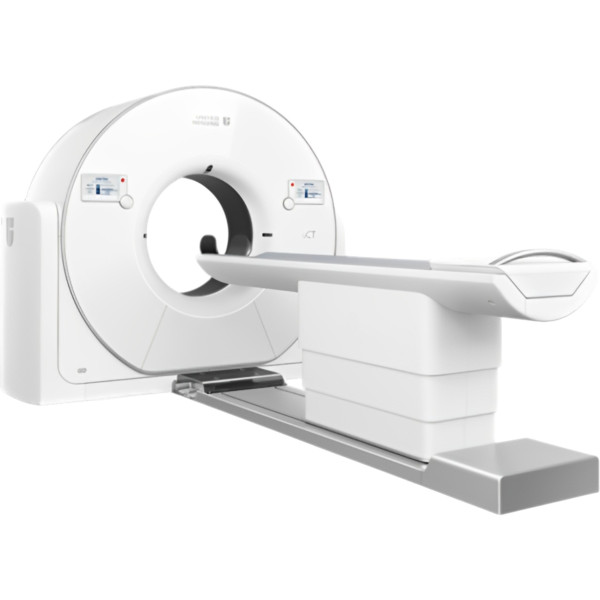 United ImagingComputed Tomography Scanner uCT 520Computed Tomography Scanner uCT 520Request priceView details
-
 See FactorMobile Computed Tomography CT-3Mobile Computed Tomography CT-350 000 000 грнView details
-
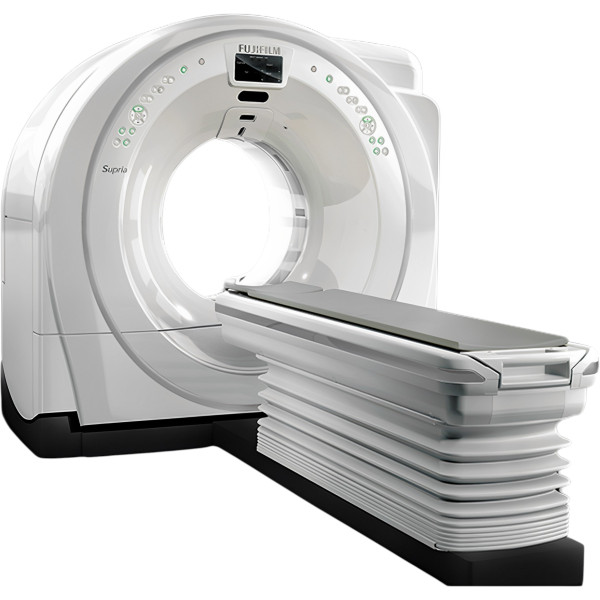 FUJIFILMSupria 128 128-slice computed tomography systemSupria 128 128-slice computed tomography systemRequest priceView details
-
-
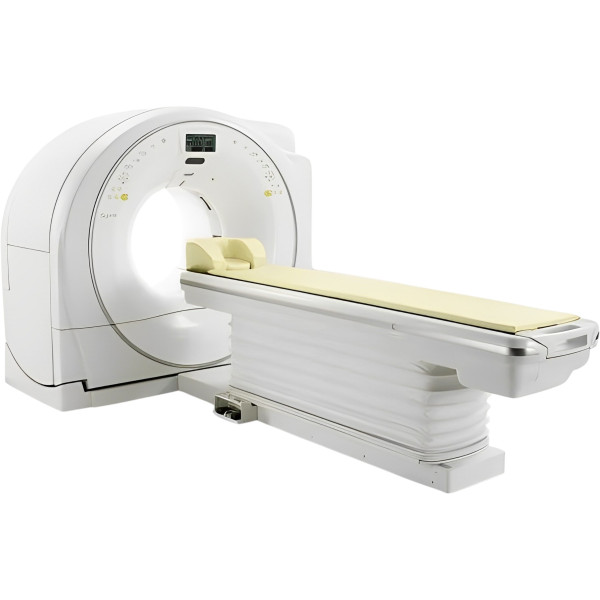
WandongTurboTom 3 computed tomography systemTurboTom 3 computed tomography system23 100 000 грнView details
-
-
-
Computed Tomography (CT) Scanners
A CT scanner builds cross-sectional images of the body from X-ray projections. The tube and detector rotate around the patient, and software turns the data into thin slices and 3D reconstructions that the physician can scroll through in any plane on a workstation, so one scan replaces several X-rays. The Finer catalog has fixed and mobile systems from United Imaging and Wandong, plus SEE FACTOR.
Why does a hospital need a CT scanner?
In a hospital, CT is first of all needed for emergency diagnosis of trauma and stroke, and in oncology. A scan is quick, so a polytrauma patient can be examined head to pelvis in one go without being moved between machines. In multislice scanners the tube rotates continuously while the table moves, which is why tenders still say "spiral CT scanner". Almost every modern CT works this way. The slice count decides whether a scanner can handle CT angiography and cardiac studies or is meant for routine diagnostics.
Which CT scanners does the Finer catalog offer?
The uCT 520 CT scanner handles up to 40 slices and has a moving gantry. The TurboTom 3 is a fixed system with 64-slice reconstruction. The CT-3 mobile CT combines cone-beam CT with fluoroscopy and 2D imaging on a motorized platform. It is brought to the patient. The room still has to be shielded against radiation.
What should you consider before buying a CT scanner?
Start with the slices. Routine studies need 16 to 32 slices; CT angiography and cardiac work usually call for 64 or more. Next come the gantry and table: aperture, maximum patient weight, dose reduction tools for children. The software side shapes the department's work too, with DICOM, transfer to PACS and the hospital information system, and post-processing. Ask separately about X-ray tube life, because the tube is one of the most expensive parts of the scanner.
The room is prepared in advance. It needs radiation shielding built to a design. Power supply and air conditioning come next, and the facility needs a license to use sources of ionizing radiation. Renovation and shielding are budgeted separately, so plan them together with the scanner.
Where to buy a CT scanner?
Since 2015 Finer Ukraine LLC has supplied healthcare facilities with diagnostic imaging equipment, from X-ray machines up to CT. Tell us how many patients a day you expect and what room you have for the scanner. Our doctors and engineers will help you choose the model and prepare the quote and tender documents. We then organise delivery and installation, commission the scanner and train your staff. For a new department see our turnkey solutions. MRI scanners are in Tomography systems (MRI), other equipment in X-ray machines. Call 0 800 334 585 or visit the contacts page.
FAQ
1. How does a CT scanner work?
An X-ray tube rotates around the patient while detectors on the opposite side measure how much radiation passes through the body at each angle. A computer converts these projections into thin slices, which are then used to build 3D reconstructions in any plane.
2. How is a CT scanner different from MRI?
CT uses X-rays; MRI uses a magnetic field and radio waves. CT is faster and shows bone and bleeding well, the lungs too, so it is the choice for trauma and stroke. MRI shows soft tissue in more detail and involves no radiation dose. MRI scanners have their own catalog section.
3. What does a CT scanner consist of?
From the outside it is a ring-shaped gantry and a table that slides into the opening. Inside the gantry are the X-ray tube and detectors that rotate around the patient. The system also includes a generator and a workstation where the physician reviews and processes the slices.
4. Which CT scanner is best for a hospital?
The one that matches its studies. Routine diagnostics needs 16 to 32 slices, which the uCT 520 covers with up to 40. If you plan CT angiography and cardiac studies, look at systems with 64 slices or more, such as the TurboTom 3.
5. How much does a CT scanner cost?
The price depends on the slice count and the gantry, on post-processing software, on tube life and the workstation configuration. Some models have a price on the website; for the rest we quote in a commercial proposal. Preparing a shielded room is budgeted separately.
Categories by purpose
Recently viewed


- Solutions
- Finer Ukraine