-
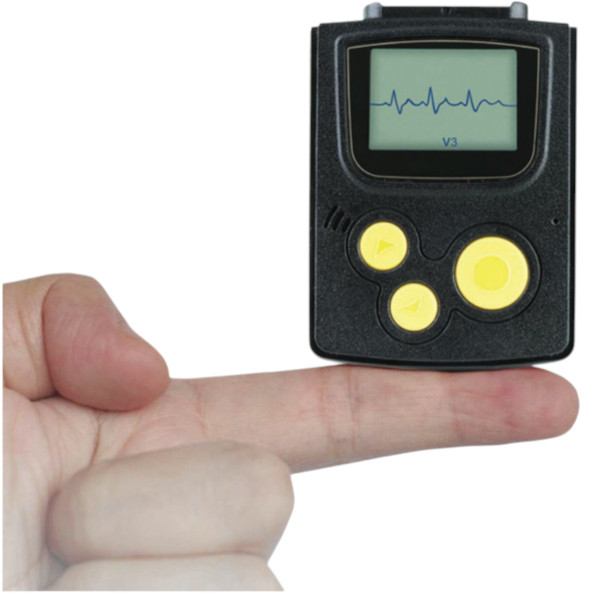 Progetti3-channel cardiac monitor (Holter) PG 8 Plus3-channel cardiac monitor (Holter) PG 8 PlusRequest priceView details
-

-
Holters
A Holter ECG records the electrocardiogram continuously, usually for 24 hours or longer, while the patient goes about a normal day: commuting, sleeping, climbing stairs. The Finer catalog has portable BTL Holter recorders and a three-channel recorder from Progetti. This is core equipment for a functional diagnostics room, a cardiology department or a private cardiology practice.
What is a Holter ECG used for?
A standard ECG in the office lasts a few minutes. In that time an occasional arrhythmia, a pause or ST changes under exertion may simply not show up. A 24-hour recording catches them, and the patient's diary lets the doctor match complaints with what the ECG showed at that moment. Did the patient feel palpitations on the stairs at 3 p.m.? The doctor opens the recording at exactly that minute. That is why Holter monitoring is ordered when there are symptoms but the resting ECG looks normal. An ambulatory blood pressure monitor (ABPM) is a separate cuff device; this section lists Holter ECG recorders only.
Which Holter monitors are in the Finer catalog?
The BTL-08 Holter H100 and BTL-08 Holter H300 are portable battery-powered BTL recorders for patients of any age. The cards describe kits with a 5-lead or 10-lead patient cable and a pouch, plus rechargeable batteries and SD cards. One kit adds a wireless USB module, the other electrodes. The manufacturer calls one model compact and easy to record with, and the other a model with an extended standard kit. The PG 8 Plus 3-channel Holter monitor from Italy's Progetti runs on an AAA battery and records to a removable SD card.
How do you choose a Holter monitor for a facility?
The first question is channels. Three channels are enough for most rhythm studies. Twelve give the full picture for ST analysis and locating changes, but a 10-lead cable makes the recorder harder to wear. The second question is duration. Twenty-four hours is standard; for rare episodes the doctor orders 48 to 72 hours or more, so check how long the power and memory of a given recorder last. Rechargeable batteries are charged between patients, while an AAA battery is simply swapped, though you have to keep buying them.
The doctor spends most of the time in the analysis software. It searches for arrhythmias and pauses and analyzes ST and heart rate variability. It also marks pacemaker spikes and builds a report from a template. Ask for a demo and check whether the report can go to your hospital information system. Work out throughput: while one recording is being analyzed, the next patient should already be wearing a recorder, so clinics often buy several recorders per analysis station. Budget for consumables too, because disposable electrodes and batteries wear out, as do pouches and patient cables.
Holter ECG price: what is included in the system?
The price depends on the number of channels and recording duration, as well as the software and how many recorders come in the kit. The analysis software and its licenses can weigh as much in the budget as the recorders themselves. Several models are priced in their cards, and for others we send a quote on request. To buy a Holter system that fits your real patient flow, tell us how many studies a day you plan, who will analyze the recordings and whether you already run another functional diagnostics system.
Where to buy a Holter ECG?
Functional diagnostics rooms and cardiology clinics can order Holter monitors from Finer Ukraine LLC. Since 2015 the company has supplied healthcare facilities with equipment from leading manufacturers, and its team includes doctors and engineers. They will help you decide how many recorders and which software your patient flow needs, and draft the commercial proposal and tender file. Delivery and commissioning are on them too, as is teaching staff to place the electrodes. For the same room, see our electrocardiographs; other functional diagnostics devices are collected in the Diagnostic equipment section. If you are opening a room or clinic from scratch, there are turnkey solutions. For advice on Holter systems, call 0 800 334 585 or send a written request from the contacts page.
FAQ
1. How is a Holter ECG different from a blood pressure Holter?
A Holter ECG records the electrocardiogram continuously to find arrhythmias and ischemia that do not show on a standard ECG. A blood pressure Holter (ABPM) measures blood pressure with a cuff on a schedule over 24 hours. Combined recorders exist, but this section lists Holter ECG devices.
2. How long does a Holter recording last?
Most often 24 hours. If symptoms are rare, the doctor orders 48 to 72 hours or longer, and then it matters how long the battery and SD card memory of a particular recorder last. Check these figures before you buy.
3. How many channels does a Holter ECG have?
The most common options are 3 or 12 channels. A three-channel Holter such as the PG 8 Plus covers most rhythm studies. A 12-channel recording is needed for detailed ST segment analysis and locating ischemic changes, but a 10-lead cable is less comfortable for the patient to wear.
4. How should a patient behave during Holter monitoring?
Live a normal day and keep a diary: when they walked or slept, took medication or felt symptoms. This lets the doctor match changes in the recording with what the patient was doing. The recorder must not get wet. Sleep as usual, just avoid lying on the device or pulling the cable.
5. How is a Holter ECG fitted?
A nurse prepares the skin at the electrode sites, places disposable electrodes on the chest following the lead diagram and connects the patient cable. The recorder goes into a pouch on the belt or neck and is switched on to check the signal. After the recording, data from the SD card is loaded into the analysis software.
Categories by purpose

- Solutions
- Finer Ukraine