A syringe pump delivers a drug from a syringe at a set rate and holds that rate for hours without a nurse stepping in. A volumetric infusion pump does the same with larger volumes of solution running from a bottle or bag through an infusion set. The Finer catalog has both types. It also lists enteral feeding pumps and warmers for fluids and blood, as well as racks and stations for the nurses' station.
What is a syringe pump used for?
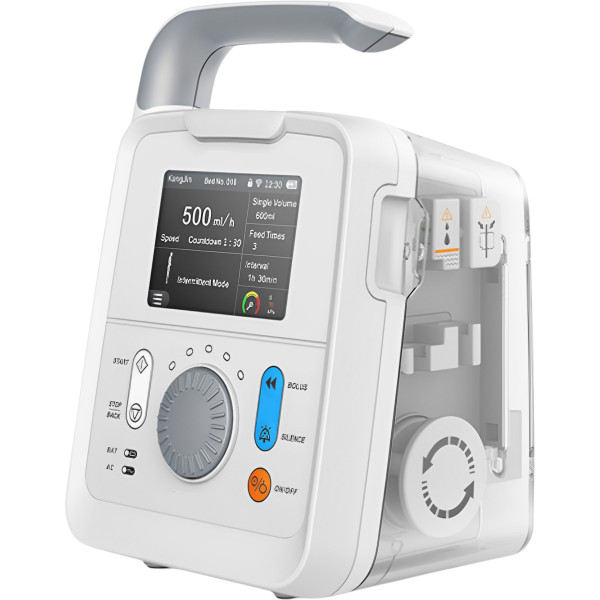
It works where a dosing error is costly: intensive care, the operating room, neonatology, oncology. A syringe infusion pump, also called a drug dosing pump, handles small volumes at precise rates. Typical drugs are vasopressors and insulin. Sedation and analgesia go through it too, as do doses for newborns. A volumetric pump handles large volumes through a standard set, such as fluids, parenteral nutrition or antibiotics. When a patient receives several drugs at once, two-channel and three-channel syringe models save space at the bedside. And when a ward has dozens of pumps, nurses find it easier to see them all from the station.
Which pumps are in the Finer catalog?
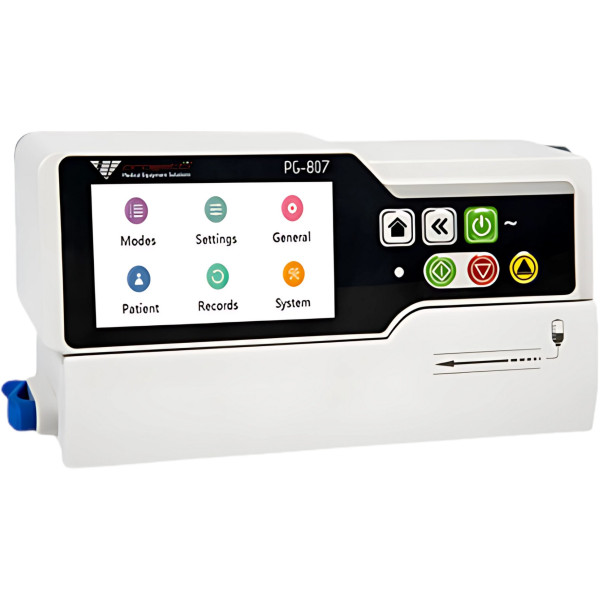
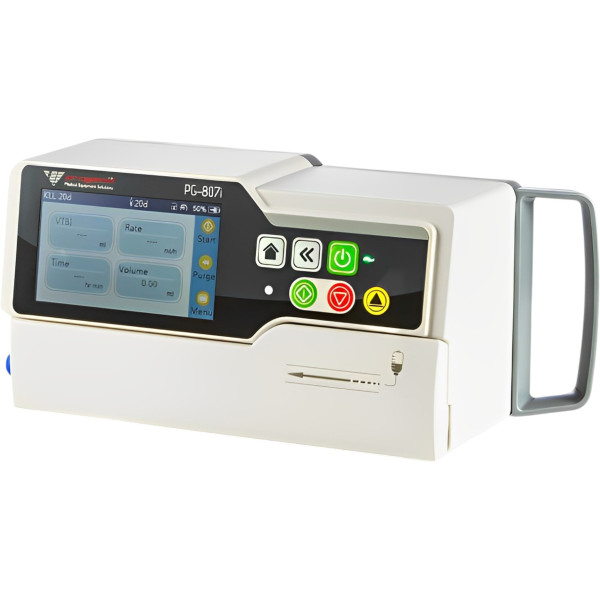
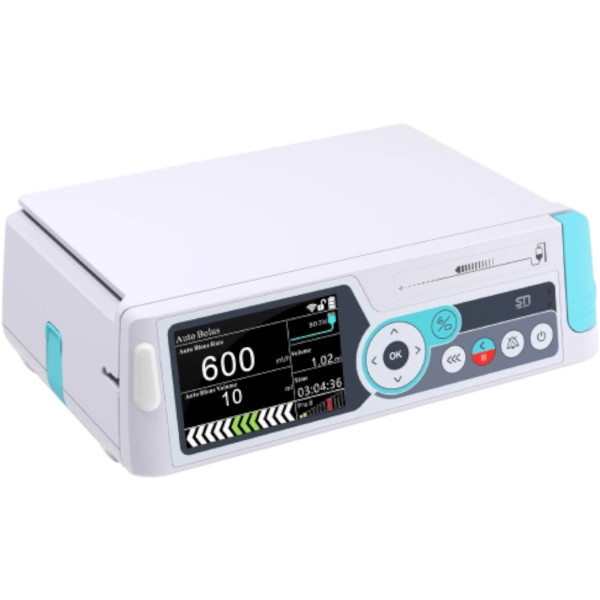
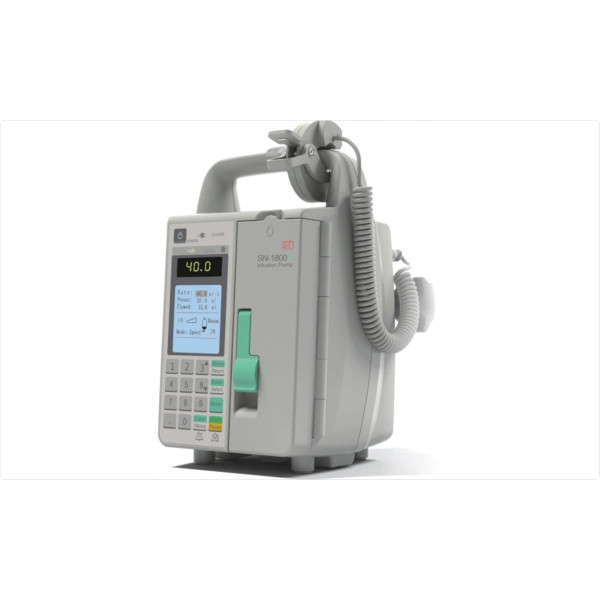
Most models are made by SINO MDT, with Progetti of Italy and Biegler Medizin of Austria also represented. Among syringe pumps, the single-channel SN-50C6 takes 10 to 50 ml syringes, the SN-50C6T calculates the infusion rate itself, the dual-channel SN-50F6 can put a channel into sleep mode, and the three-channel SN-50T66 calibrates automatically. There are also the SN-A1 and the PROGETTI PG-907s with a 4.3″ touchscreen and a DERS drug library. The SN-1600V infusion pump delivers fluids at 0.1 to 1500 ml/h. Next to it are the SN-1600VR, SN-1800V, SN-1800VR and SN-1500H(R), the programmable modular SN-S series and the PROGETTI PG-807.
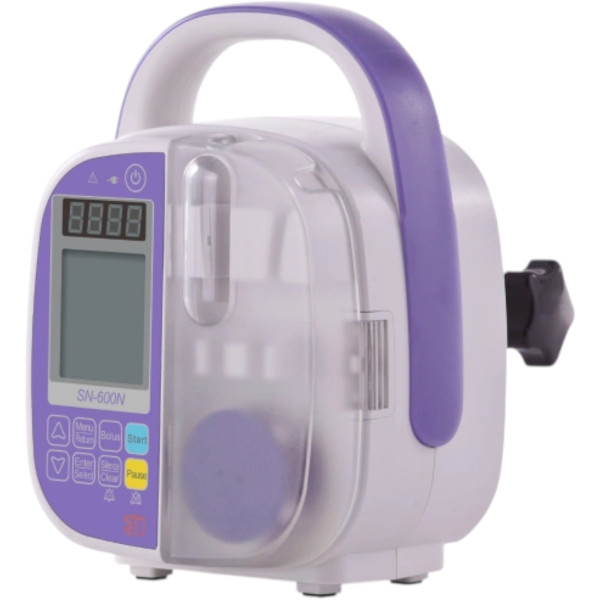
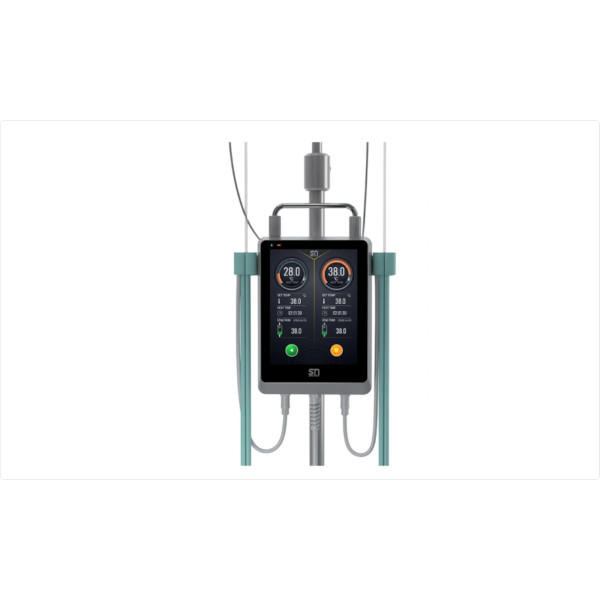
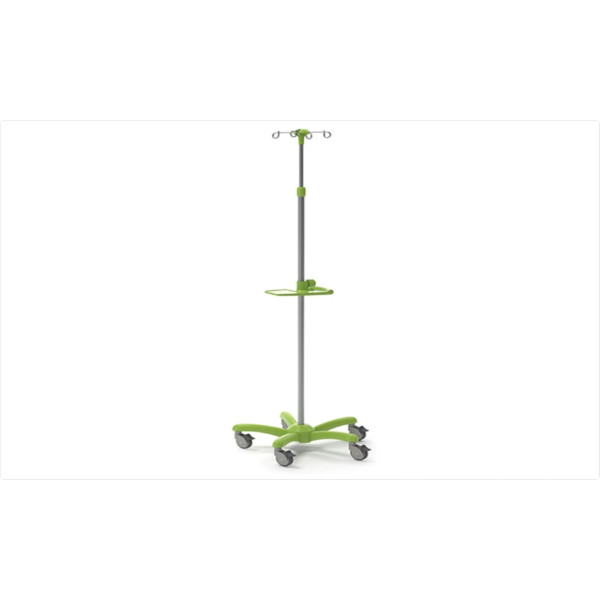
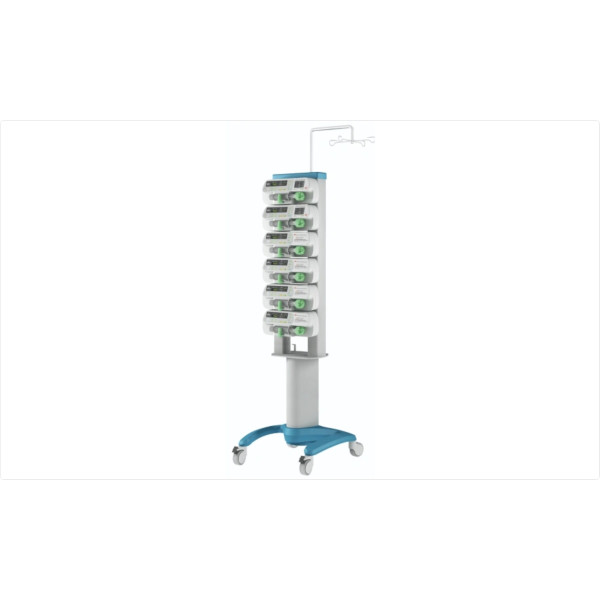
For enteral feeding there is the SN-600N with a log of 1500 records, plus the ENP-1 with control of feeding time and volume. Several warmers are listed. The portable SN-H10 uses spiral heating, the H20 IV has an 8″ screen with Wi-Fi and also warms dialysate, the BW 585 M is for rapid warming, the BW 685 has a slim housing, and the Protherm II serves infusions and massive transfusions. The ESH 04 for emergency care holds two 500 ml bottles, and its card states 37 °C for up to 90 minutes. A nurses' station is built from the SN-U1 holder for eight pumps or the SN-U6 for six, the SN-U6 and SN-U8 racks, and the SN-W100 station. The SN-M100 infusion monitoring system displays up to 500 devices at the station.
How do you choose an infusion pump?
Start with the rate range and minimum increment, and for syringe pumps, with which syringes they accept. Consumables matter just as much. A syringe pump is set up for syringes from particular manufacturers and a volumetric pump for particular infusion sets, so check what your ward actually buys. Look at the alarms: occlusion, air in line, end of infusion, dose limits in the drug library. A battery is essential for patient transport, and the cards list models running up to 6 or up to 8 hours. Some models have Wi-Fi, in some cases as an option. Plan racks and stations from the start if the ward will have many pumps, together with central monitoring.
Where to buy a syringe pump?
Finer Ukraine LLC supplies syringe and volumetric pumps to intensive care units and operating rooms as well as neonatal wards. The company has worked with healthcare facilities since 2015, and its team includes doctors and engineers. They will help allocate pumps across beds and prepare a proposal with tender documents. Then they bring the pumps and commission them before training the nurses. The cost depends on the pump type and number of channels, the drug library and network features, and the set of racks. Prices for some models are published on the website, and for the rest we send a commercial proposal. Intensive care units also use patient monitors and ventilators, operating rooms use patient warming systems, and other equipment is in the Medical equipment section. For help choosing pumps, call 0 800 334 585. A feedback form is on the contacts page, and fitting out a whole ward is covered under turnkey fit-out.
FAQ
1. What is the difference between an infusomat and a perfusor?
Both names come from trade marks and have stuck to pump types in hospital speech. A perfusor usually means a syringe pump that doses small volumes from a syringe. An infusomat is a volumetric pump working from a bottle or bag through an infusion set, though people often use the word for any infusion pump.
2. How does an infusion pump work?
In a syringe pump, a motor turns a lead screw that pushes the syringe plunger evenly at the set rate. A volumetric pump uses a peristaltic mechanism that squeezes the infusion set tubing and moves fluid in small portions. Both types watch line pressure and sound an alarm if something goes wrong.
3. How is an infusion pump different from a gravity drip?
In a gravity drip, the rate depends on bottle height and the clamp, and also on fluid viscosity, so it can drift over time. A pump holds the rate in ml/h, counts the volume infused and reports occlusion, air in line or end of infusion. For potent drugs this is critical.
4. What is occlusion in an infusion pump?
It is a blockage of the line: kinked tubing, a closed stopcock or a clotted catheter. Pressure in the line rises, the pump sensor detects it and sounds an alarm, and the infusion stops. The nurse clears the cause and restarts delivery. Many models let you set the occlusion alarm threshold.
5. How do you set up a syringe pump?
Load a syringe of a compatible size so the pump recognizes it, prime the line and set the rate in ml/h or the dose. On models with a drug library, such as the PROGETTI PG-907s with DERS, the nurse picks the drug from a list, and the pump will not allow doses outside the limits.
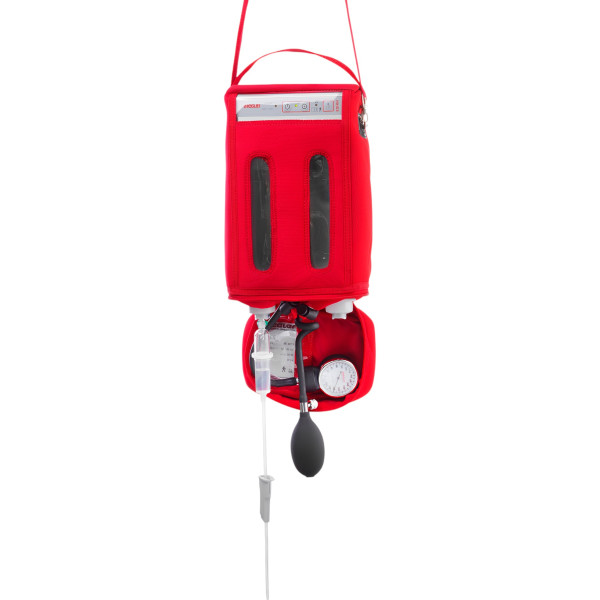 BieglerEmergency infusion solution and blood warmer ESH 04Emergency infusion solution and blood warmer ESH 04Request priceView details

 SINO MDTInfusion monitoring system SN-M100Infusion monitoring system SN-M10035 000 грнView details
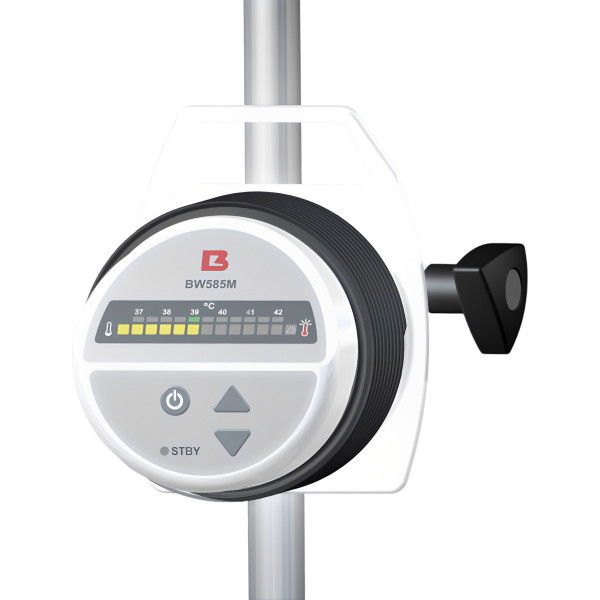 BieglerInfusion solution and blood warmer BW 585 MInfusion solution and blood warmer BW 585 MRequest priceView details
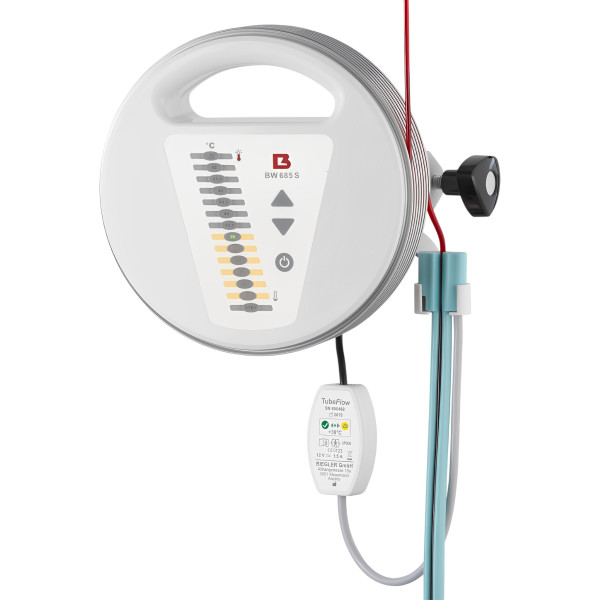 BieglerInfusion solution and blood warmer BW 685Infusion solution and blood warmer BW 685Request priceView details