-
 WandongI_Open 0.36T magnetic resonance imagerI_Open 0.36T magnetic resonance imager25 000 000 грнView details
-
WandongI_Open 0.4T magnetic resonance imagerI_Open 0.4T magnetic resonance imager28 000 000 грнView details
-
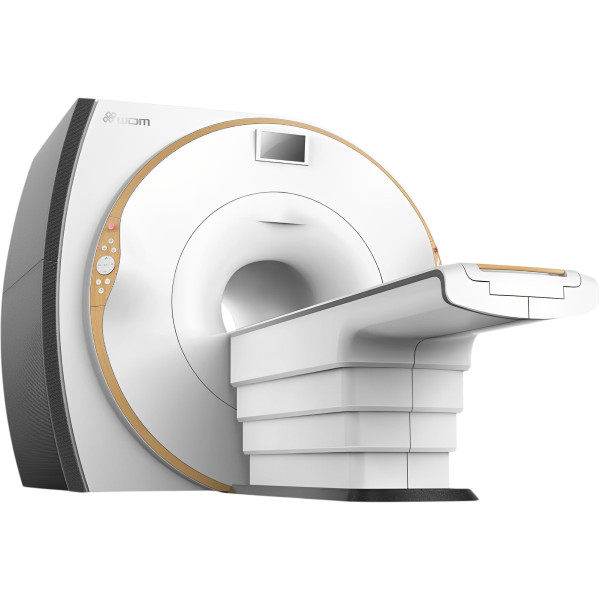 WandongMagnetic Resonance Imaging System i_Magnate 1.5TMagnetic Resonance Imaging System i_Magnate 1.5TRequest priceView details
-
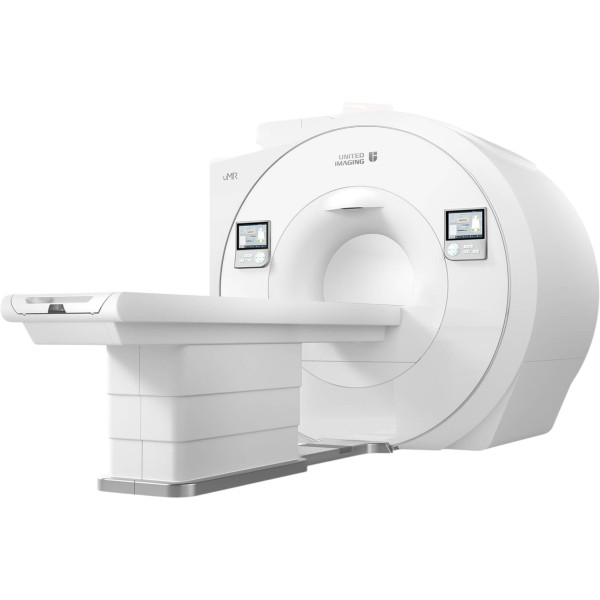 United ImagingMagnetic resonance imaging system uMR 570 (1.5 MRI)Magnetic resonance imaging system uMR 570 (1.5 MRI)Request priceView details
-
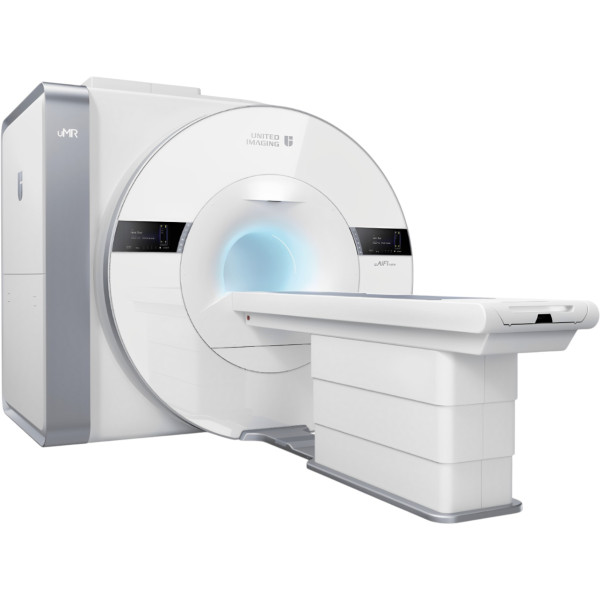 United ImagingMagnetic Resonance Imaging System uMR® Jupiter 5TMagnetic Resonance Imaging System uMR® Jupiter 5TRequest priceView details
Tomography systems
An MRI scanner images organs and tissue with a strong magnetic field and radiofrequency pulses, with no X-rays involved. Facilities choose magnetic resonance imaging when they need a detailed look at soft tissue: the brain and spinal cord, joints, the spine, pelvic organs. The key spec is field strength in tesla (T). It shapes image quality and scan time, and it also decides what the room has to be like, what room preparation and upkeep will cost and, in the end, the whole project budget.
Which MRI scanners are in the Finer catalog?
The open low-field models are the Wandong I_Open 0.36T and I_Open 0.4T. Patients with claustrophobia tolerate an open MRI more easily. For 1.5T there are the i_Magnate 1.5T, which transmits RF signals optically, and the uMR 570 by United Imaging. Facilities that need an ultra-high field can look at the uMR Jupiter 5T with a superconducting magnet. So the section covers everything from a compact room for joints and the spine to a system built for advanced neuroimaging and research.
Which MRI field strength should you choose?
Open scanners up to 0.5T cost less to run and work well for joints and the spine, though scans take longer. A 1.5T system is the everyday standard for a general hospital, and it handles most routine exams of the brain and spine. Joint and abdominal scans are routine on it too. Systems of 3T and above are bought for advanced neuro and cardiac imaging or research. Choose the field together with the radiologists who will work on the scanner, keeping in mind which exams your facility will do most often.
What does an MRI room need?
The first question is the magnet type. A permanent magnet needs no liquid helium. A superconducting magnet is helium-cooled, so the project has to include the cryogenic system with its chiller plus a quench pipe. The room itself needs RF shielding (a Faraday cage), floor load calculations and a delivery route for the magnet. The scanner is paired with coils that match your exam mix and a reading workstation connected to PACS over DICOM. All this is best planned before you pick a model, because it affects both the go-live date and the budget.
Where to buy an MRI scanner?
Through Finer (Finer Ukraine LLC), on the market since 2015, Ukrainian medical facilities get MRI scanners from leading global manufacturers. Our team includes doctors and engineers who will suggest the field strength and configuration that fit your exams and put together the tender paperwork. We take care of delivery and commissioning and train radiographers on the new protocols. A department built from scratch can be equipped through our turnkey solutions. CT scanners are in Computed Tomography (CT) Scanners, other imaging equipment is in X-ray machines. You can discuss a project by phone at 0 800 334 585 or send a written request from our contacts page.
FAQ
1. How does an MRI scanner work?
A strong magnetic field aligns protons in the tissue, and a radiofrequency pulse briefly knocks them out of balance. As they return, they give off a signal that the coils pick up, and a computer builds a slice image from it. Different tissues return at different rates, which is why MRI separates soft tissues so well.
2. What does an MRI scanner show?
MRI is best at soft tissue. It shows the brain and spinal cord in detail, joints with their ligaments and cartilage, the spine with its intervertebral discs, pelvic organs. That is why it matters to neurology and orthopedics, trauma care, oncology or gynecology. Bones and lungs are more often examined on CT.
3. How does an MRI scanner differ from CT?
Unlike CT, MRI uses a magnetic field and radiofrequency pulses with no X-rays, and it separates soft tissues better. CT uses X-rays and scans faster, and it shows bone and lungs better. CT scanners are collected in a separate section of the catalog.
4. Which MRI is better, open or closed?
It depends on the job. An open low-field scanner such as the I_Open 0.36T or 0.4T is easier for patients with claustrophobia and cheaper to run, but scans take longer. Closed high-field systems of 1.5T and above give faster exams and a wider choice of protocols for a general hospital.
5. How much does an MRI scanner cost?
The price of an MRI depends on field strength, magnet type, the coil set and room preparation, so we quote it for a specific project. Budget for upkeep as well, since a superconducting magnet needs helium and a cryogenic system while a permanent one does not.
Categories by purpose





- Solutions
- Finer Ukraine