-
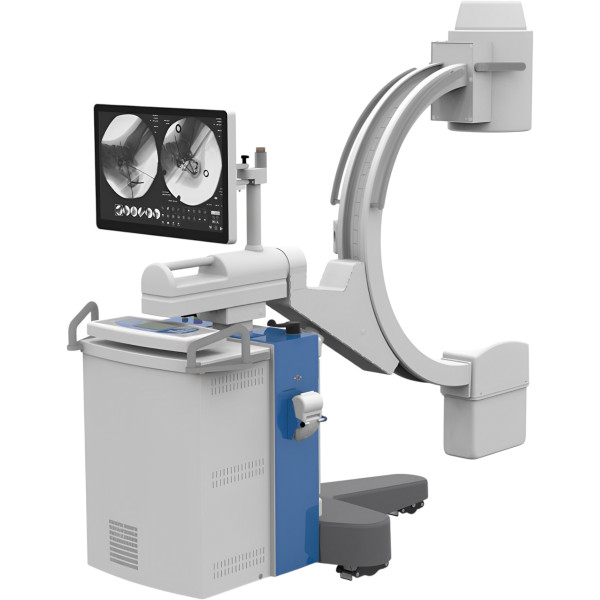
 SIMADC-arm for vascular and cardiology EMD F2H1 VC-arm for vascular and cardiology EMD F2H1 V10 103 940 грнView details
-
-
-
-
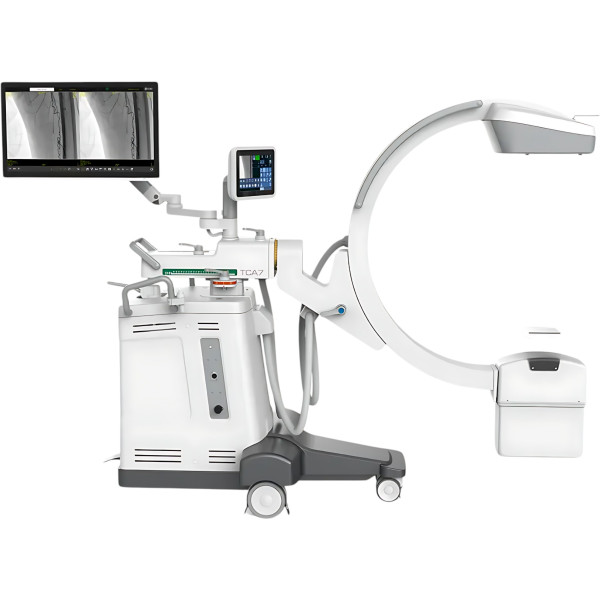 TechnixC-arm X-ray system TCA 7 CompactC-arm X-ray system TCA 7 CompactRequest priceView details
-
-
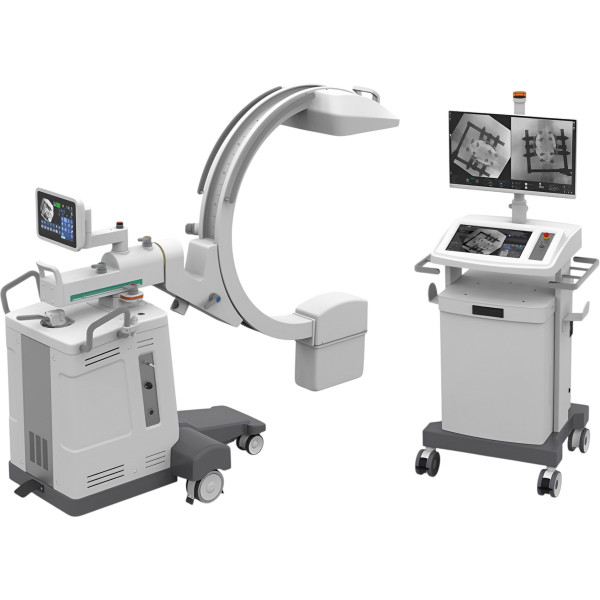
C-arm
A C-arm is a mobile X-ray system for images and fluoroscopy during surgery. The tube and the image receptor sit at the ends of a C-shaped arm that rotates around the patient without moving them off the table. This section of the Finer catalog lists C-arm X-ray systems by the Italian company Technix for surgery, orthopaedics or angiography, including a compact model for small operating rooms.
What is a C-arm used for?
An X-ray C-arm is needed in trauma and orthopaedics to check fracture reduction and the position of implants. Vascular surgery and urology use it too, as does interventional pain management. The surgeon sees the image at once, without taking the patient to the X-ray room or waiting for a film. The arm is wheeled to the operating table, aimed at the area of interest, and the team takes a series of frames or runs fluoroscopy during the manipulation. After the procedure the mobile C-arm moves on to another operating room, so one system can serve a whole surgical suite.
How do you choose an X-ray C-arm?
Start with the image receptor. An image intensifier is cheaper, while a flat panel detector gives an image without edge distortion and usually allows a lower dose. Next come the generator and its modes: power, pulsed fluoroscopy, last image hold, dose control for the patient and the team. The arm geometry decides whether the right projection of the spine or pelvis can be obtained. That means the free space and depth of the arm along with its orbital and lateral rotation angles.
Check the dimensions. Will the system fit through doors and into the lift, and how much space will it take by the table when the anaesthetist, the scrub nurse and the monitors are already there? The tabletop must be radiolucent, so look at operating tables together with the C-arm.
Which C-arms are in the Finer catalog?
The product card for TCA 7 describes it as a mobile C-arm for surgery, orthopaedics or angiography. TCA 7 Compact is made for small operating rooms with little space around the table. TCA 6 has microprocessor control and a flexible architecture. Other X-ray equipment is in the X-ray machines section, and for bedside images there are portable X-ray machines.
Where to buy a C-arm?
X-ray and other equipment for hospitals and clinics has come from Finer Ukraine LLC since 2015. We price a C-arm in a quote for the specific configuration, because the cost changes a lot with the receptor type and the generator, as well as software options. If you want to buy a C-arm for your operations, our team of doctors and engineers will choose the model with you and prepare the tender documents. They then deliver and start up the system, and train surgeons and radiographers to work with the arm in theatre. How to equip a whole operating room is described on the solutions page, and questions about C-arms can go to 0 800 334 585 or the contacts page.
FAQ
1. What is a C-arm?
A mobile X-ray system in which the X-ray tube and the image receptor face each other at the ends of an arm shaped like the letter C. The arm rotates around the patient on the operating table to give images or continuous fluoroscopy in different projections.
2. How does a C-arm work?
The tube at one end of the arm emits an X-ray beam that passes through the patient and reaches an image intensifier or flat panel detector. The system turns the signal into an image and shows it on the monitor straight away. Pulsed mode delivers the beam in short bursts to reduce the dose.
3. Is a C-arm harmful to staff?
A C-arm emits ionizing radiation, so the team wears protective aprons and keeps a distance from the beam. Pulsed fluoroscopy, last image hold and dose control all lower the dose. The facility will need a licence to use sources of ionizing radiation.
4. How much does a C-arm cost?
We state the price in a quote for the specific configuration. The biggest factors are the receptor type (image intensifier or flat panel), generator power and software options such as vascular packages. A compact model for a small operating room costs differently from a system for angiography.
5. What does a facility need to work with a C-arm?
A licence to use sources of ionizing radiation, radiation protection for the team and a radiolucent operating table. Check in advance that the system fits through the doors and into the lift and that there is room by the table. Staff need training to work with the arm.
Categories by purpose

- Solutions
- Finer Ukraine