-
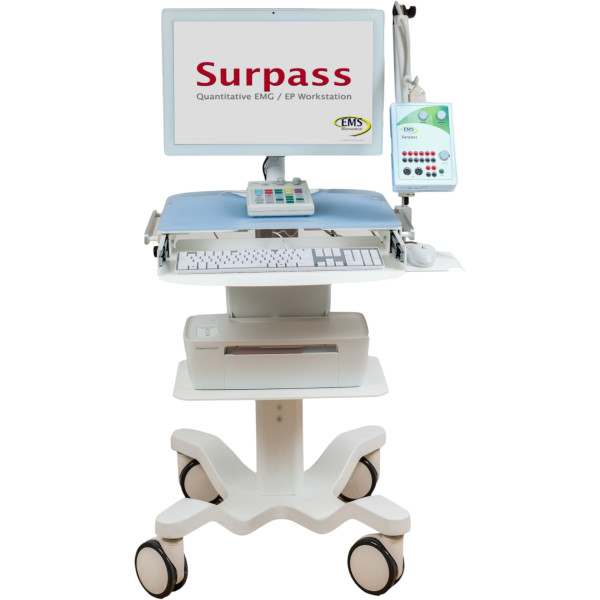 EMS Biomedical2-channel EMG system with built-in stimulators2-channel Electromyograph SurpassRequest priceNewView details
-
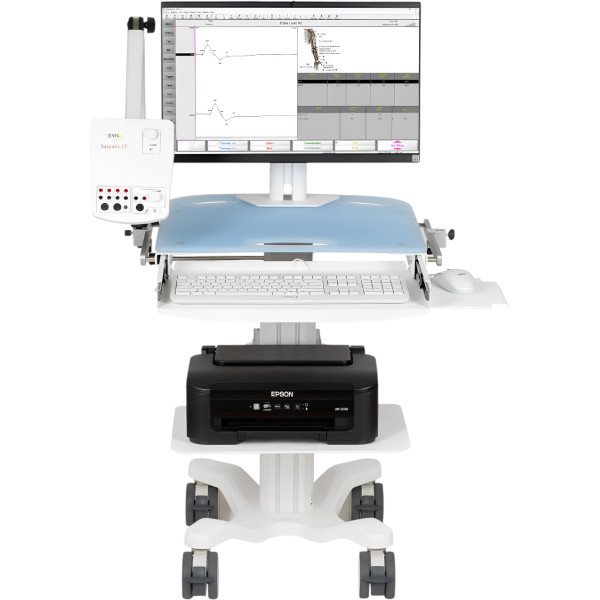 EMS Biomedical4-channel EMG/EP/EEG modular workstation4-channel electromyograph Surpass LTRequest priceNewView details
-
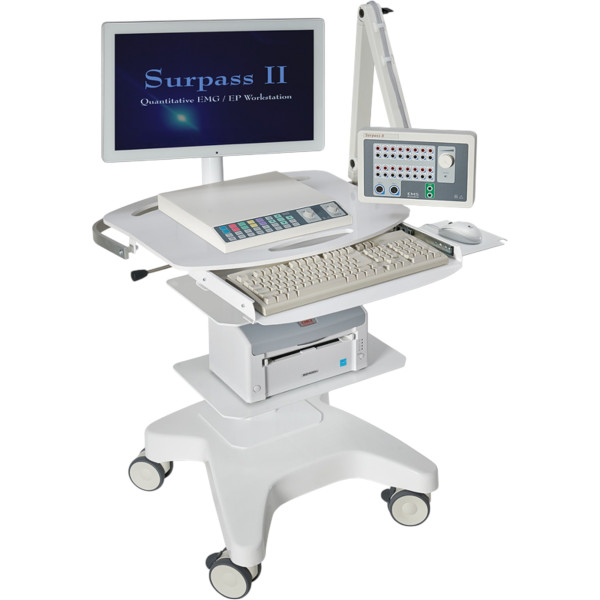 EMS BiomedicalBipolar EMG amplifier for up to 24 channels, USB 2Electromyograph Surpass IIRequest priceNewView details
Electromyographs
An electromyograph records the electrical activity of muscles and the speed at which impulses travel along nerves. Neurologists use it to find where a nerve or muscle is damaged and how badly. The Finer catalogue has Surpass electromyographs by the Austrian company EMS Biomedical in 2 and 4 channel versions, plus the Surpass II amplifier with up to 24 channels.
What is an electromyograph used for?
Electromyography (EMG) is ordered for numbness, weakness in the arms or legs, pain along a nerve, or after injury. Nerve conduction studies show how fast an impulse travels along a nerve, and needle EMG shows how the muscle itself works. Together they tell nerve damage apart from muscle disease and show exactly where the problem is. Many neurophysiology rooms also run evoked potentials and EEG on the same equipment.
How to choose an electromyograph?
The number of channels depends on the studies. For stimulation EMG and nerve conduction studies, 2 channels are enough. If the room also does evoked potentials and EEG, take a 4 channel station. A multichannel amplifier is needed for complex montages. It helps when the stimulators are built into the amplifier: there are fewer separate units and cables at the workstation. Modular systems can be expanded later without replacing the whole setup.
Which electromyographs are in the Finer catalogue?
All three devices are made by EMS Biomedical, a company that designs and manufactures its own equipment for electrophysiological diagnostics. The 2 channel Surpass is an EMG system for clinical work with built-in stimulators. The 4 channel Surpass LT is a workstation for EMG and evoked potentials as well as EEG. Surpass II is a bipolar amplifier with up to 24 channels and input switching to a common reference, so the montage can be changed without moving the electrodes.
Where to buy an electromyograph?
Since 2015 Finer has supplied healthcare facilities in Ukraine with diagnostic equipment by leading global manufacturers. We will help put together a configuration for the studies your neurophysiology room runs and prepare a quote and tender documents. Then we organise delivery and commissioning and train the doctors. We give the price of an electromyograph in the quote together with the software and the electrode kit. Sienna electroencephalographs by the same manufacturer are in the Electroencephalographs section, and our team can help you choose a system on 0 800 334 585.
FAQ
1. What is electromyography?
A test that records the electrical activity of muscles and the speed of impulses along nerves. For short, EMG. From the results a neurologist locates nerve or muscle damage and judges its extent. It is ordered for numbness, for weakness in the arms or legs, for pain along a nerve, or after injuries.
2. Electromyography or electroneuromyography: what is the difference?
Most often both names refer to the same test. The word electroneuromyography stresses that the nerves are examined too. The stimulation part shows how fast an impulse travels along a nerve, while needle EMG shows how the muscle itself works. The stimulation part needs stimulators, and on Surpass they are built into the amplifier.
3. How does an electromyograph work?
Electrodes pick up electrical signals and the amplifier passes them to the software. In a conduction study the stimulator sends an impulse to the nerve and the device measures how fast it travels. Two channels are enough. The 4-channel Surpass LT also records evoked potentials plus EEG; Surpass II has up to 24 channels.
4. Which doctor performs electromyography?
A neurologist, most often in a neurophysiology room. Such rooms also record evoked potentials and EEG on the same equipment, so the configuration is built around all of their tests. Surpass LT combines EMG with evoked potentials and EEG in one workstation. The software is supplied together with the system.
5. What is needle electromyography?
The part of the test that shows how the muscle itself works. The signal is picked up by a needle electrode placed directly in the muscle, while stimulation EMG assesses nerve conduction. Together these studies tell nerve damage apart from muscle disease. Surpass systems are modular, so they can be extended for new studies.
Categories by purpose


- Solutions
- Finer Ukraine