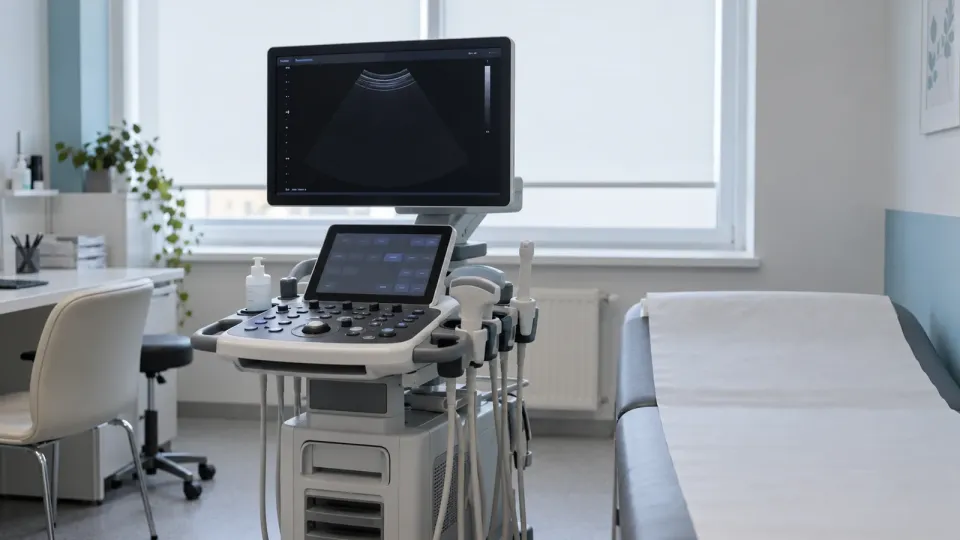
An ultrasound machine in a clinic runs every day and is often shared by several doctors. One scans the abdomen, thyroid or breast, another works with the heart or vessels, a third follows pregnancies, and the emergency department needs urgent bedside exams. So the model is chosen around the list of exams rather than the class label. The Finer catalog has cart-based systems for diagnostic ultrasound rooms and portable units for emergency departments and intensive care or for field visits. The listings name four manufacturers: GE, SIUI, Wisonic plus Hisense.
Which ultrasound machines are in the Finer catalog?
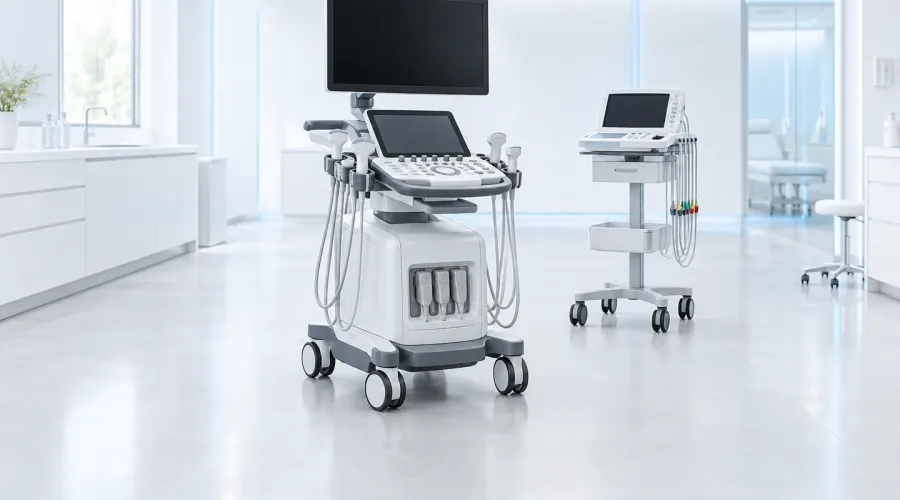
Most of the section is cart-based systems, and they differ a lot by class. A multi-specialty clinic or outpatient center can look at the SIUI Apogee line (3500, 5300, 5500), built for a broad range of exams, and at HD60, which its listing calls a high-definition system for multi-specialty clinics, with HD70 next to it. Q40 is compact and aimed at general clinical practice, while GE is represented by Versana Essential. The expert and premium tier includes the Apogee 6500 diagnostic ultrasound system and the cart-based Navi. SuperSonic MACH 20 uses UltraFast imaging at up to 20,000 frames per second, and Voluson Performance 18 from GE covers obstetrics and gynecology. Other cart-based systems in the section are Carnation, Labat, Lotus, Aisense, plus APOGEE 1000, which its listing ties to extracorporeal procedures.
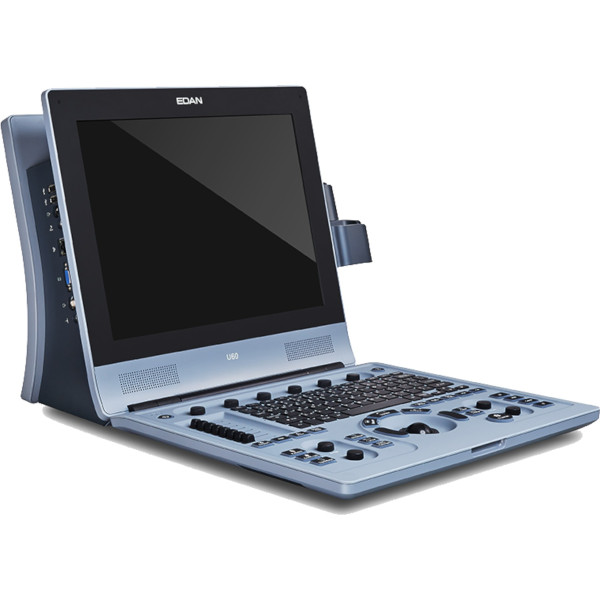
Among the portable models, the PILOTER portable ultrasound system is designed for urgent exams and sits in the expert class, as does CLOVER 60 with single-crystal probes. U60 is rated mid-range by its maker. Clivia and APOGEE 2300 are portable too, and Clivia by Wisonic has a built-in camera for running online consultations through WiCloud. DRAMIŃSKI BLUE with Doppler is intended for emergencies. All portable systems are also gathered on the Portable ultrasound page.
How do ultrasound machine classes differ?
Entry-level, mid-range, high-end, expert or premium: these ultrasound classes were invented by manufacturers, and no shared standard stands behind them. A class usually reflects signal processing power and the range of probes you can connect. It also covers Doppler modes, elastography, 3D/4D volume imaging plus automated measurements. An expert-class system pays off where doctors see complex patients and write reports for other specialists, as in cardiology, vascular surgery or prenatal diagnostics. A room that mostly handles routine abdominal and thyroid scans often does fine with a mid-range unit and good probes.
How to choose an ultrasound machine for your facility?
Start with the list of exams for the room's first year and with who will be operating the machine, because that decides the probe set. The abdominal organs need a convex probe and vessels with superficial structures a linear one. The heart is scanned with a sector (phased array) probe. Gynecology and urology work with an endocavity probe, and 3D/4D obstetrics needs a volume probe. One probe can cost a noticeable share of the system, so put only the ones you will use into the proposal. Next come Doppler and software packages: color and power Doppler, pulsed-wave Doppler and, for cardiology, continuous-wave. Elastography and the cardiac or obstetric packages are often sold as separate licenses.
Doctors spend hours at the machine, so an adjustable control panel and monitor height matter, as does a touchscreen (two models in the catalog have a 21.3″ one). A portable unit is wheeled between wards or taken on visits. Listings for battery-powered models mention a built-in battery, some with up to 2 or up to 6 hours of runtime. Agree on DICOM and image transfer to PACS or the hospital information system before the purchase, along with printing and report export, because adding modules after commissioning is harder. Ask about probe repair as well, since probes are most often damaged by drops and kinked cables. Ultrasound needs no radiation shielding the way an X-ray room does. Dimmed lighting and a couch the doctor can reach from the side are enough, along with stable power and space for the cart, plus a charging spot for a portable unit between exams.
What affects the price of an ultrasound machine?
Some models show a price on their page, and for the rest we prepare a quote on request. The price depends on the number of probes and software packages (cardiology, elastography, 3D/4D). The DICOM option, the cart, a printer or an extra monitor add to it, so the same system can cost differently in two quotes. To buy an ultrasound machine without extras, tell us which exams you plan and how many patients you see a day. Mention whether you need portability and which hospital information system you use. Then the quote includes only the probes and packages your doctors will actually use.
Where to buy an ultrasound machine?
Finer Ukraine LLC has been supplying Ukrainian medical facilities with equipment by leading global manufacturers since 2015. Our doctors and engineers will match a probe and package set for a diagnostic ultrasound room to your exams and prepare the commercial proposal with the tender paperwork. We then deliver and commission the machine and teach your doctors to work with it. For a diagnostic department or a new clinic fitted out from scratch, there are our turnkey solutions. A prenatal room usually needs fetal monitors next to the ultrasound, a breast center also needs a mammography system, and other devices are in Diagnostic Equipment. To pick an ultrasound system for your facility, call 0 800 334 585 or fill in the form on the contacts page.
FAQ
1. How to choose a probe for an ultrasound machine?
The probe follows the exam. The abdomen and obstetrics need a convex probe. Vessels and superficial structures such as the thyroid need a linear one. The heart calls for a phased array, and in gynecology or urology an endocavity probe is used. The set for your department is built with the commercial proposal, so you do not pay for probes that sit in a cupboard.
2. What is an expert-class ultrasound machine?
Manufacturers use the term for systems with stronger signal processing and a wider range of probes and modes, such as Doppler, elastography, 3D/4D or automated measurements. In our catalog, Apogee 6500 is rated expert class, as are PILOTER and CLOVER 60. Screening and general practice usually manage with a basic or mid-range system.
3. Which ultrasound machine is the best?
There is no single best one; the machine is matched to the exams. Cardiology, vascular surgery or prenatal diagnostics need an expert-class system with Doppler and volume modes, while a room for routine scans does fine with a mid-range unit and good probes. In intensive care or on field visits the battery life and weight of a portable model matter more.
4. How does an ultrasound machine work?
The probe sends short ultrasound pulses into the body and picks up the signals reflected by tissue. The machine measures how long each echo takes to return and how strong it is, then builds a real-time image from that. Doppler modes show blood flow: color Doppler on the image itself, spectral Doppler as a velocity graph for a specific vessel.
5. What does an ultrasound machine consist of?
The core parts are the probes that emit and receive ultrasound, a signal processing unit, and a monitor with a control panel built around a keyboard or touchscreen. A cart-based system stands on wheels and has several probe ports, while a portable one runs on a battery. A printer and a cart are added separately, along with a DICOM module for sending images to PACS.
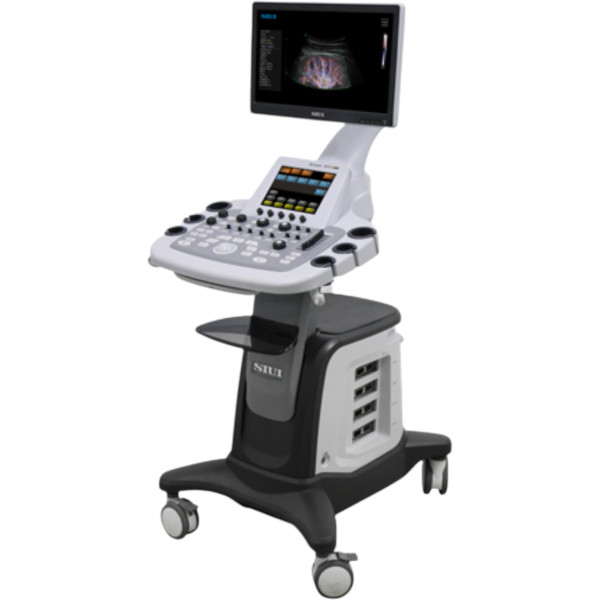 SIUIDiagnostic ultrasound system Apogee 3500Diagnostic ultrasound system Apogee 3500Request priceView details
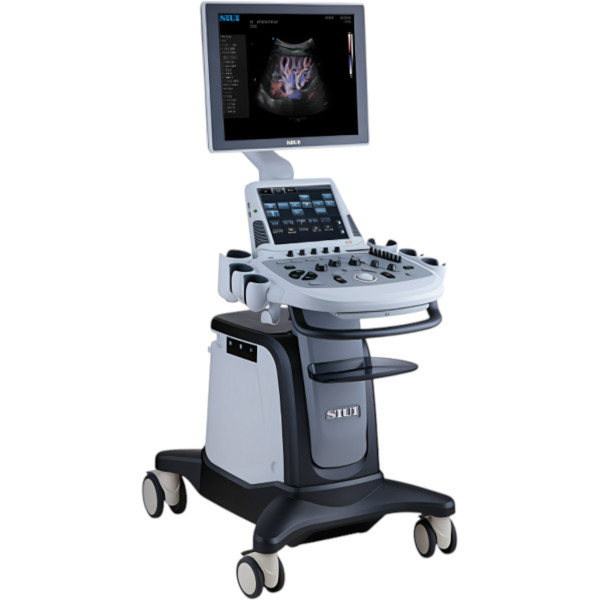 SIUIDiagnostic ultrasound system Apogee 5300Diagnostic ultrasound system Apogee 5300Request priceView details
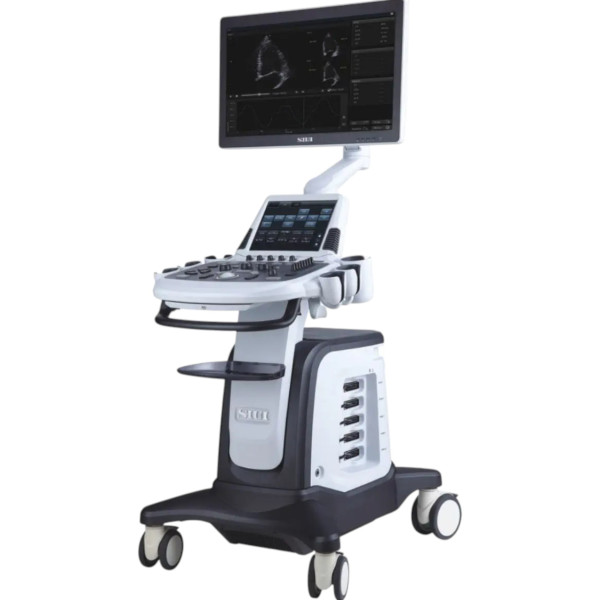 SIUIDiagnostic ultrasound system Apogee 5500Diagnostic ultrasound system Apogee 5500Request priceView details
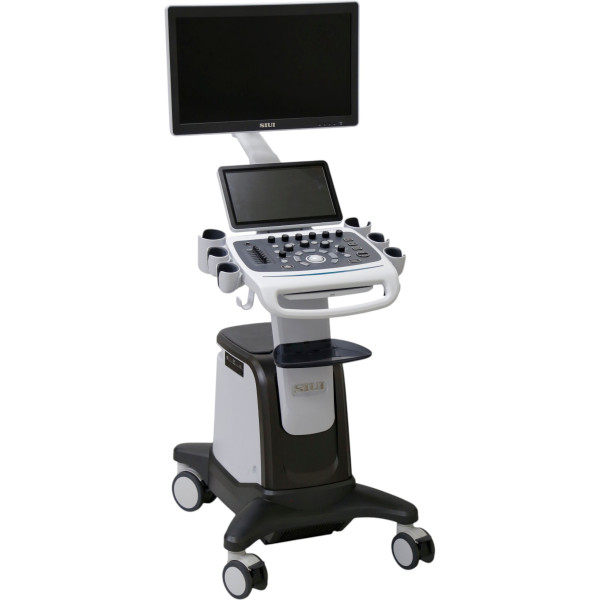 SIUIDiagnostic ultrasound system Apogee 6500Diagnostic ultrasound system Apogee 6500Request priceView details
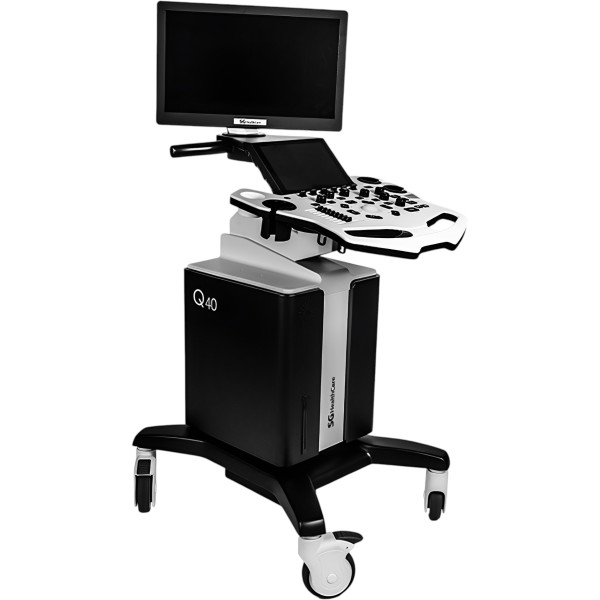 SG HealthCareDiagnostic ultrasound system Q40Diagnostic ultrasound system Q40Request priceView details
 WisonicPortable ultrasound system CliviaPortable ultrasound system Clivia1 800 000 грнView details
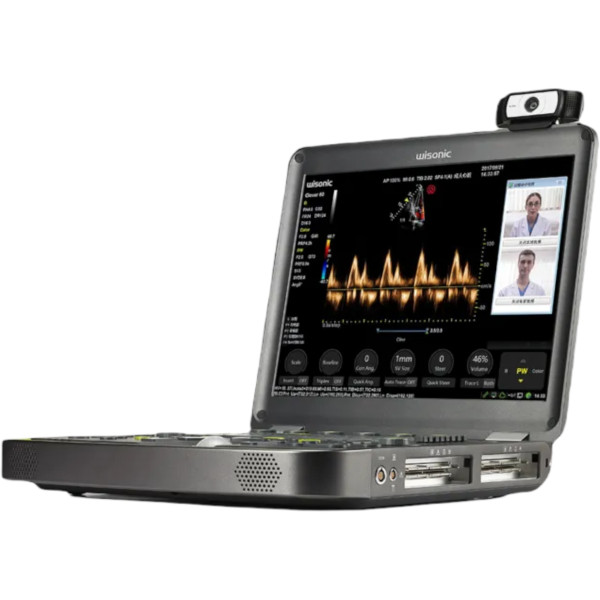 WisonicPORTABLE ULTRASOUND SYSTEM EXPERT CLASS CLOVER 60PORTABLE ULTRASOUND SYSTEM EXPERT CLASS CLOVER 60Request priceView details
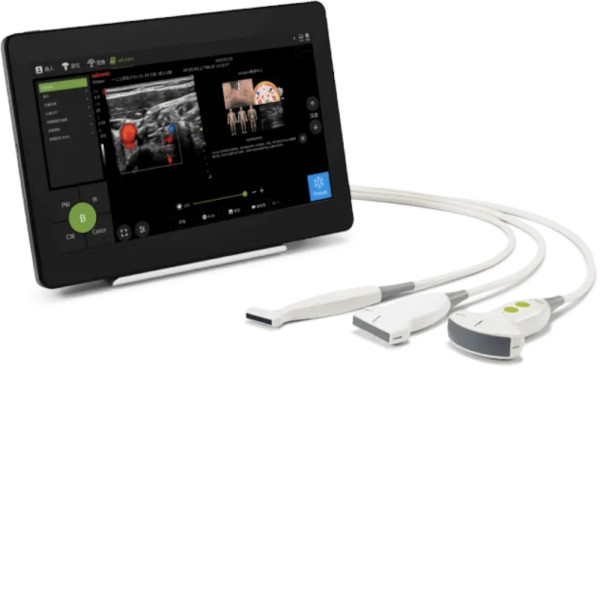 WisonicPORTABLE ULTRASOUND SYSTEM PILOTERPORTABLE ULTRASOUND SYSTEM PILOTERRequest priceView details
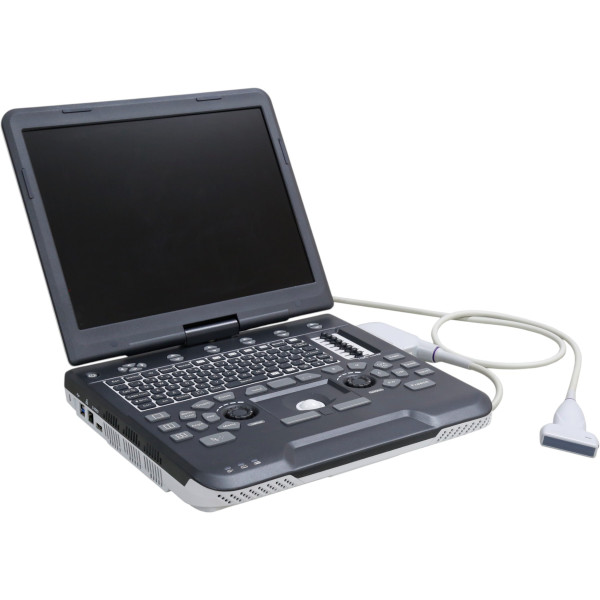 SIUIUltrasound diagnostic system APOGEE 1000Ultrasound diagnostic system APOGEE 1000Request priceView details
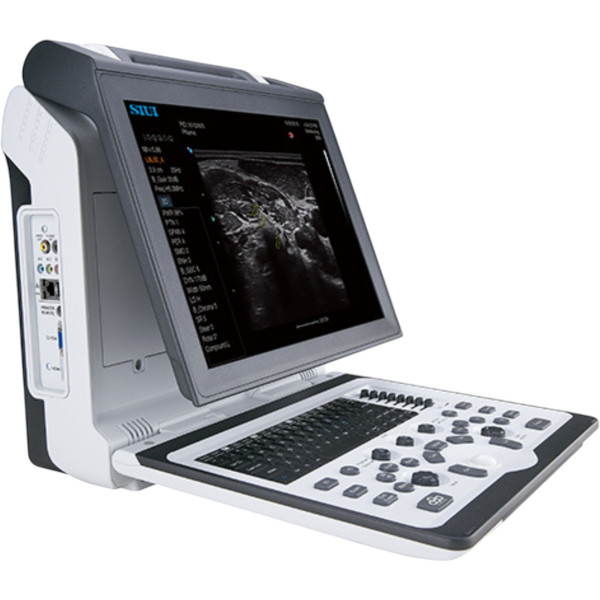 SIUIUltrasound Diagnostic System APOGEE 2300Ultrasound Diagnostic System APOGEE 2300Request priceView details
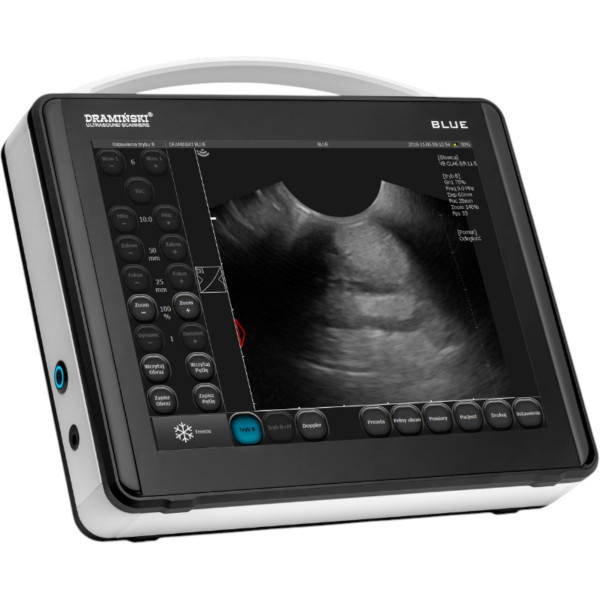 DramińskiUltrasound Diagnostic System DRAMIŃSKI BLUEUltrasound Diagnostic System DRAMIŃSKI BLUERequest priceView details
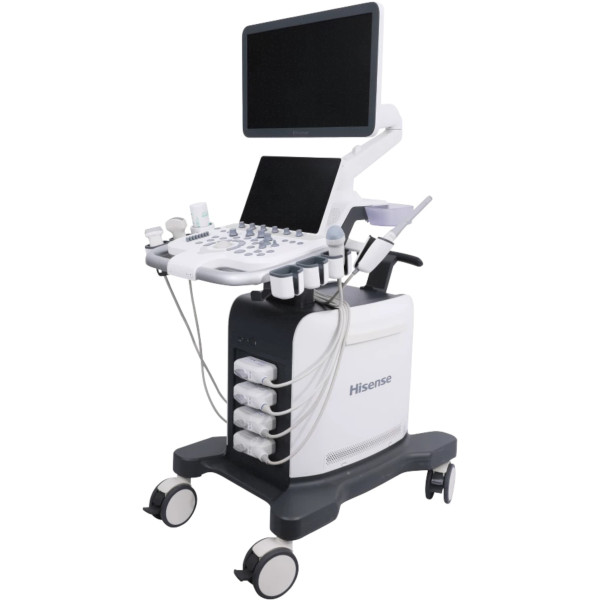 HisenseUltrasound diagnostic system HD60Ultrasound diagnostic system HD60Request priceView details