Fetal monitors
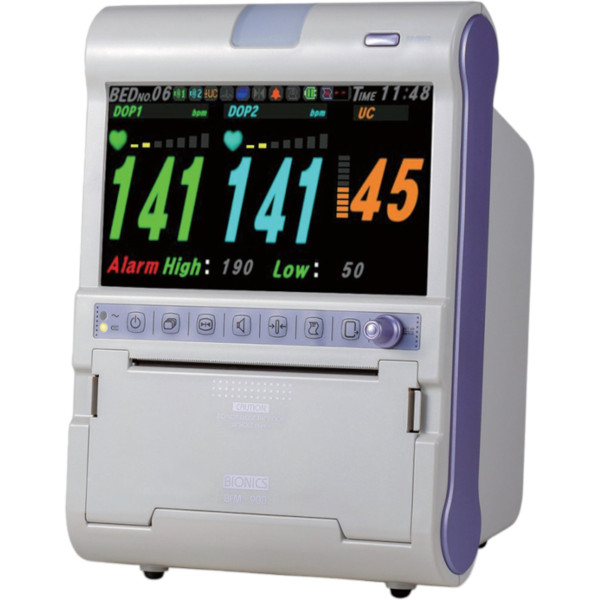
A fetal Doppler and a fetal monitor both listen to the fetal heart with ultrasound, but they do different jobs. A pocket Doppler lets you hear the heartbeat during an examination, while a fetal monitor records cardiotocography (CTG), the fetal heartbeat together with uterine contractions over a long period. This section of the Finer catalogue currently has fetal monitors by General Meditech and Progetti, plus BFM-900, for obstetric departments.
What is a fetal monitor used for?
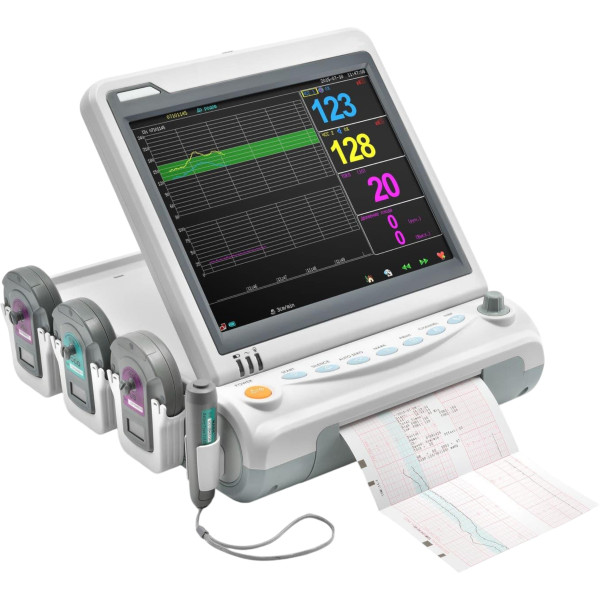
CTG shows how the fetal heart responds to uterine contractions and movements. From the trace, the doctor sees signs that the baby is short of oxygen and decides how to manage labour. That is why there is a fetal monitor in every delivery room, and obstetric departments use it during pregnancy as well. A maternal and fetal monitor such as G6B-Plus also tracks the condition of the woman herself.
How to choose a fetal monitor?
A delivery room needs a monitor with long recording and audible alarms that go off even when staff have left the room. If the department sees multiple pregnancies, choose a model with a dual ultrasound transducer, such as PG 800G, so that each fetal heartbeat is recorded separately. For moving a patient between departments a compact monitor is convenient, and a modular configuration lets you add the measurements you need later.
Which fetal monitors are in the Finer catalogue?
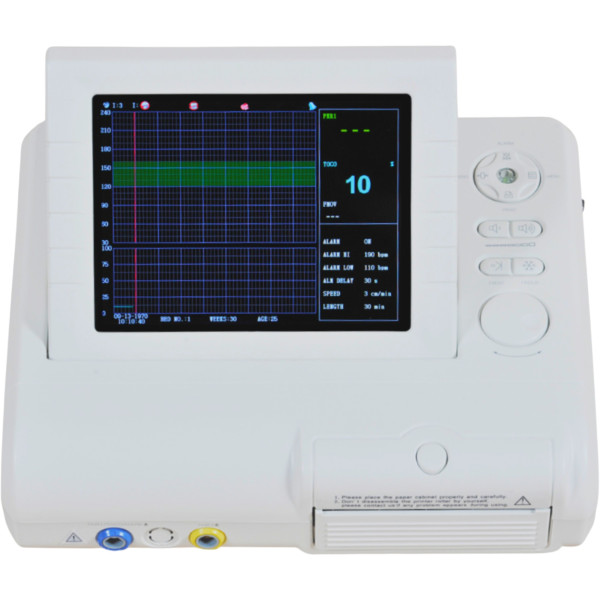
G6B-Plus by General Meditech is a maternal and fetal monitor with a modular configuration that assesses the fetus together with the mother's condition and uterine activity. PG 800G by Progetti has a single or dual transducer, an SpO₂ function, an 8.4″ TFT screen and an audible alarm. BFM-900 is a compact monitor for obstetric departments that keeps recording while the patient is being moved.
Where to buy a fetal monitor?
Since 2015 Finer Ukraine LLC has equipped healthcare facilities in Ukraine, including obstetric departments and perinatal centres. We will help you decide on the number of monitors and transducers, prepare a quote or purchase documents, deliver the equipment and train your staff. We give the monitor price in the quote together with the transducers and configuration. Ultrasound machines for obstetrics are in the Ultrasound section, and our team can help you choose a model on 0 800 334 585.
FAQ
1. How does a fetal Doppler differ from a fetal monitor?
Both listen to the fetal heart with ultrasound, but for different tasks. A pocket Doppler lets you hear the heartbeat during an examination. A monitor records the heartbeat over a long period together with uterine contractions, which is CTG, and it has audible alarms that go off even when staff have left the room.
2. What is a fetal monitor?
It is a cardiotocograph. It records the fetal heart rate and uterine contractions at the same time, and that recording is called CTG. The doctor uses it to assess the fetus during pregnancy and labour. A maternal and fetal monitor such as G6B-Plus by General Meditech also tracks the condition of the mother herself.
3. What does CTG show?
How the fetal heart responds to contractions and movement. From the trace the doctor sees signs that the baby is short of oxygen and decides how to manage labour. For a multiple pregnancy you need a dual ultrasound transducer, as on PG 800G by Progetti, so each fetal heartbeat is recorded separately.
4. Does the catalogue have pocket Dopplers?
This section currently holds units for obstetric departments: G6B-Plus, PG 800G with its SpO₂ function, and the compact BFM-900, which keeps recording while the patient is moved. Finer supplies equipment to healthcare facilities. If your department needs a Doppler for examinations specifically, ask about availability on 0 800 334 585.
5. How do you buy CTG monitors for a maternity unit?
First count the delivery rooms and decide whether you see multiple pregnancies. That sets how many units and transducers you need. We then prepare a quote or purchase documents, deliver the equipment and train the staff. The modular configuration of G6B-Plus lets you add measurements later.
Categories by purpose




Recently viewed


- Solutions
- Finer Ukraine